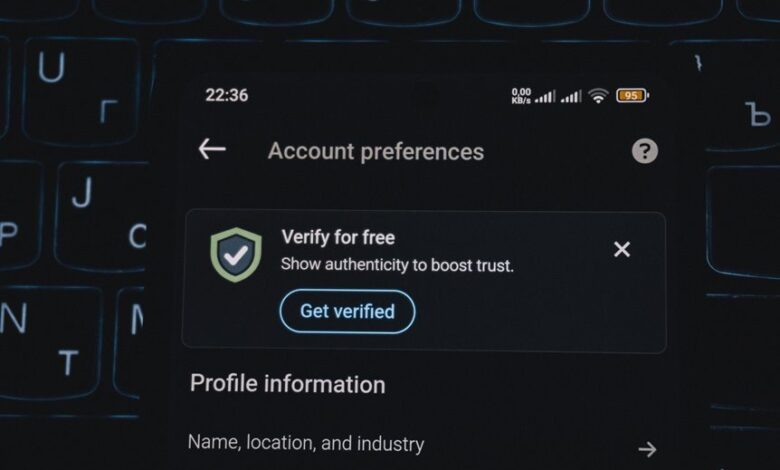
Verified number profiles offer auditable provenance and data minimization for the five numbers: 3510249601, 3665452435, 3517875063, 3339091137, and 3791140200. The approach emphasizes origin transparency, corroborated activity, and stable contact histories, while avoiding overreliance on badges. A stepwise, cross-checked verification process helps reduce bias and improve trust without sacrificing privacy. The discussion will assess signals and practical implications, but leaves the reader contemplating the next verification steps to pursue.
What Are Verified Number Profiles and Why They Matter
Verified Number Profiles refer to validated data sets that represent individual numbers with confirmed attributes, histories, and associations. The analysis outlines how verified profiles serve as trustworthy reference points, enabling informed decisions while reducing ambiguity. They function as trust signals in data ecosystems, where disciplined collection and rigorous checks underpin profile verification, ensuring transparency, accountability, and operational clarity for stakeholders seeking freedom through reliable information.
How to Assess Trust: Signals Behind Each Profile
Assessing trust in verified number profiles hinges on identifying core signals that indicate reliability, provenance, and consistency. The analysis emphasizes origin transparency, corroborated activity patterns, and stable contact histories as indicators of credibility.
Disinformation risks are mitigated when profiles demonstrate cross-verified identifiers. Privacy considerations arise from data minimization, controlled sharing, and auditable provenance, ensuring users retain agency without compromising verification integrity.
Practical Tips for Verifying Contact Details Safely
Practical verification of contact details requires a disciplined, stepwise approach that minimizes risk while preserving user privacy. The section analyzes methods to verify sources, emphasizing minimal data exposure and auditable processes. A structured risk assessment identifies potential failure modes, while independent cross-checks and provenance validation reduce bias. Detached evaluation supports freedom-oriented scrutiny without compromising ethical or security standards.
Interacting With Verified Profiles: Best Practices and Pitfalls
Interacting with verified profiles requires a disciplined approach to interpretation, verification, and response.
The analysis emphasizes cautious engagement, noting that signals may be misleading.
Observers should apply discreet verification and objective criteria before trust is assigned.
Cross check methods reduce bias, while prompt, respectful interaction preserves autonomy.
Pitfalls include overreliance on badges, confirmation bias, and misattributed credibility.
Conclusion
In the end, the examined profiles converge on a single coincidence: consistent provenance and corroborated activity rarely appear by chance. When origin transparency, auditable provenance, and stable contact histories align across independent checks, trust indicators gain legitimacy beyond badges. Yet no signal guarantees credibility; meticulous cross-verification remains essential. The coincidence lies in the deliberate layering of evidence—not in any single attribute—guiding users toward prudent, privacy-respecting engagement rather than assuming credibility from appearance alone.