For most pool owners, keeping the water crystal clear feels like a never-ending battle. Hours spent vacuuming, brushing walls, and skimming debris only to find missed spots and algae creeping back within days—it’s a frustrating cycle that steals weekends and tests patience. Traditional cleaning methods demand constant attention, physical effort, and rarely deliver the thorough results your pool actually needs to stay healthy and inviting.
The good news is that pool maintenance has entered a new era. Modern automated cleaners equipped with smart navigation systems and 360° cleaning capabilities are fundamentally changing how homeowners care for their pools. These aren’t the random, bumbling machines of the past. Today’s intelligent cleaners map your pool, plan efficient routes, and scrub every surface with precision that manual effort simply cannot match.
This guide walks you through exactly how these technologies work, why they matter, and how to choose and maintain the right solution for your pool. Whether you’re tired of spending your free time on pool chores or simply want better results with less effort, understanding smart navigation and comprehensive cleaning technology is the first step toward a spotless pool that practically takes care of itself.
The Fundamentals of Efficient Pool Cleaning
A clean pool isn’t just about aesthetics—it’s about protecting your investment and safeguarding the health of everyone who swims in it. When cleaning is inconsistent or incomplete, bacteria multiply, chemical balance deteriorates, and surfaces degrade. Algae takes hold in neglected corners, calcium deposits build on waterline tiles, and fine sediment settles into pores of plaster or grout, causing permanent staining. Over time, poor maintenance shortens the lifespan of your pool’s finish, equipment, and plumbing.
Homeowners face a familiar set of challenges. Leaves and organic debris decompose quickly, consuming chlorine and feeding algae blooms. Wind-blown dust and pollen create a fine layer that manual vacuuming often pushes around rather than captures. Uneven coverage is perhaps the most common frustration—spending an hour cleaning only to notice dirty patches along walls, steps, or behind ladders. And then there’s the sheer time commitment: most pools require two to three hours of manual attention each week to stay presentable, let alone pristine.
Traditional suction-side and pressure-side cleaners offered some relief but introduced their own problems—reduced filtration performance, tangled hoses, and random movement patterns that leave sections untouched. Modern robotic pool cleaners represent a fundamentally different approach. Operating independently from your pool’s pump and filter system, these self-contained units carry their own motors, filtration, and increasingly sophisticated onboard intelligence. They don’t just move through water—they think about where they’ve been and where they need to go next, which sets the stage for the technological breakthroughs that make today’s cleaning truly efficient.
See also: Public Relations Tips That Deliver Better Business Results
Smart Navigation: The Brain of Your Pool Cleaner
What separates a truly “smart” pool cleaner from one that simply moves is the ability to understand its environment and make decisions accordingly. Smart navigation refers to an onboard intelligence system that combines physical sensors with computational algorithms to map your pool’s dimensions, track the cleaner’s position in real time, and calculate the most efficient route to cover every surface. Rather than bouncing off walls and hoping to eventually reach every corner—the approach older models relied on—a smart navigator knows exactly where it is, where it’s been, and where it still needs to go.
The hardware behind this intelligence typically includes gyroscopes that detect rotational movement, accelerometers that measure changes in speed and direction, and proximity or infrared sensors that identify walls, steps, and obstacles before contact. Some advanced models add inertial measurement units that fuse data from multiple sensors simultaneously, creating a more accurate internal picture of the pool’s geometry. This sensor fusion allows the cleaner to maintain positional awareness even in a featureless underwater environment where GPS and visual landmarks aren’t available.
How Smart Navigation Algorithms Work
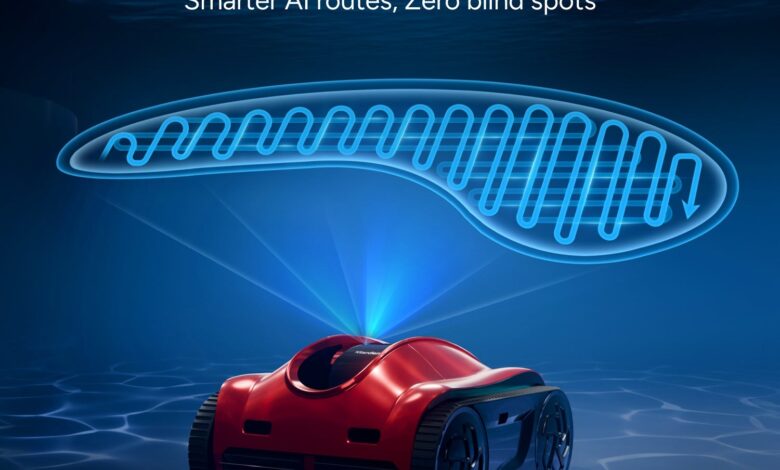
Once the sensors feed raw data to the onboard processor, algorithms translate that information into action. Path-planning logic typically employs one of several strategies—or a combination. Grid-based patterns divide the pool floor into systematic rows, ensuring the cleaner sweeps every lane without overlap. Spiral patterns work outward from center points to cover large open areas quickly. The most sophisticated systems adapt in real time, switching strategies based on the pool’s shape: a long rectangular pool might trigger a linear back-and-forth pattern, while an irregular freeform design prompts the algorithm to segment the space into manageable zones. When the cleaner encounters an unexpected obstacle—a pool toy left on the bottom or an oddly placed step—it recalculates its path on the fly, navigating around the obstruction and returning to its planned route without leaving gaps in coverage.
Real-World Benefits for Homeowners
For you, the pool owner, smart navigation translates into tangible everyday advantages. First, complete coverage means no more discovering dirty patches after a cleaning cycle finishes. The cleaner methodically reaches walls, corners, steps, and the waterline—areas that random-pattern machines frequently skip. Second, efficiency improves dramatically; because the cleaner isn’t redundantly passing over the same sections, cycle times drop significantly compared to traditional robotic models, saving energy and reducing wear on brushes and motors. Third, there’s genuine peace of mind. You can start a cycle, walk away, and trust that the job will be done thoroughly without supervision or follow-up spot cleaning. When evaluating a cleaner’s navigation, look for these indicators: does the manufacturer specify sensor types, does the unit offer customizable cleaning modes for different pool shapes, and do user reviews confirm consistent full-coverage results? These details reveal whether the “smart” label is backed by real engineering or is merely marketing language.
Unmatched Coverage with 360° Cleaning Technology
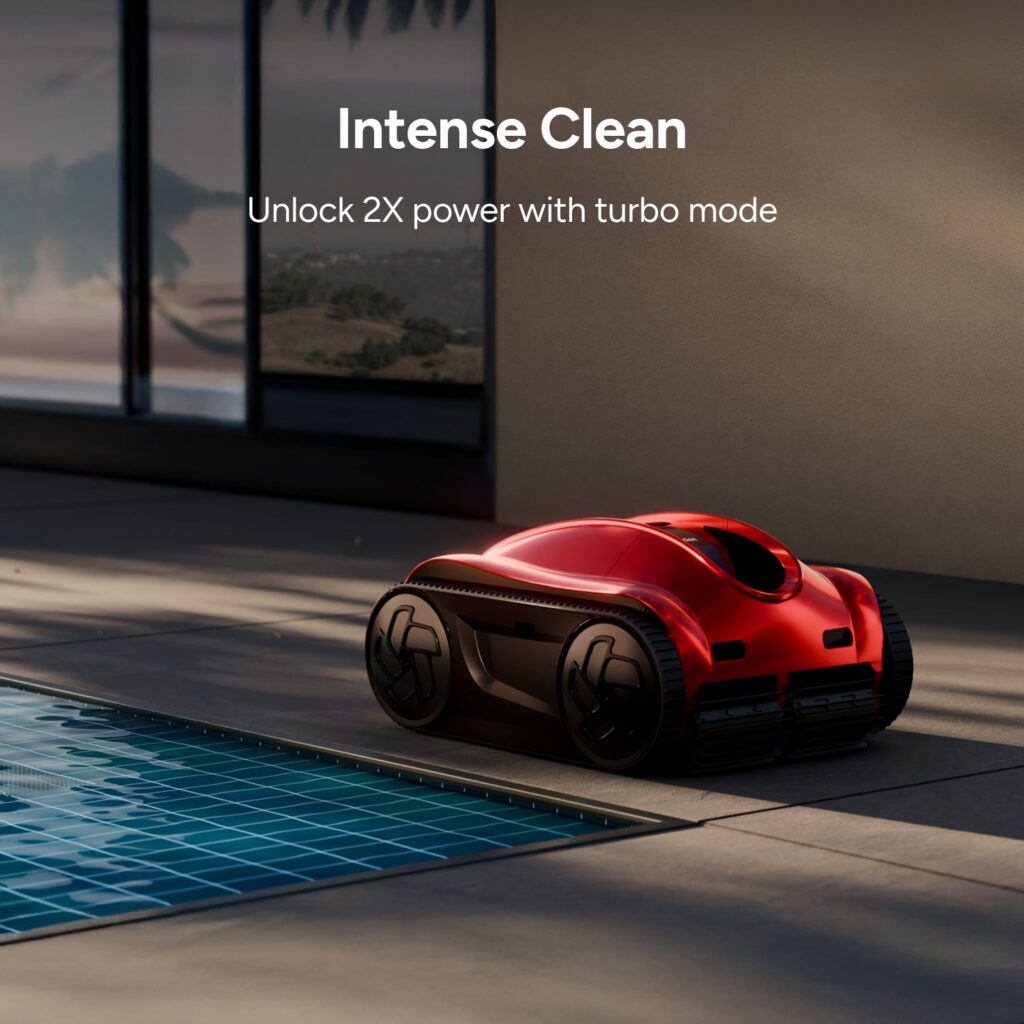
Smart navigation gets your cleaner to the right place, but 360° cleaning technology ensures it actually captures debris from every angle once it arrives. This approach combines omnidirectional brush systems, strategically positioned suction ports, and engineered water flow patterns to pick up contaminants regardless of which direction the cleaner is traveling. Unlike older designs that only collected debris from directly beneath or in front of the unit, a 360° system scrubs and suctions from all sides simultaneously—meaning nothing gets pushed aside or left behind as the machine moves along its calculated path.
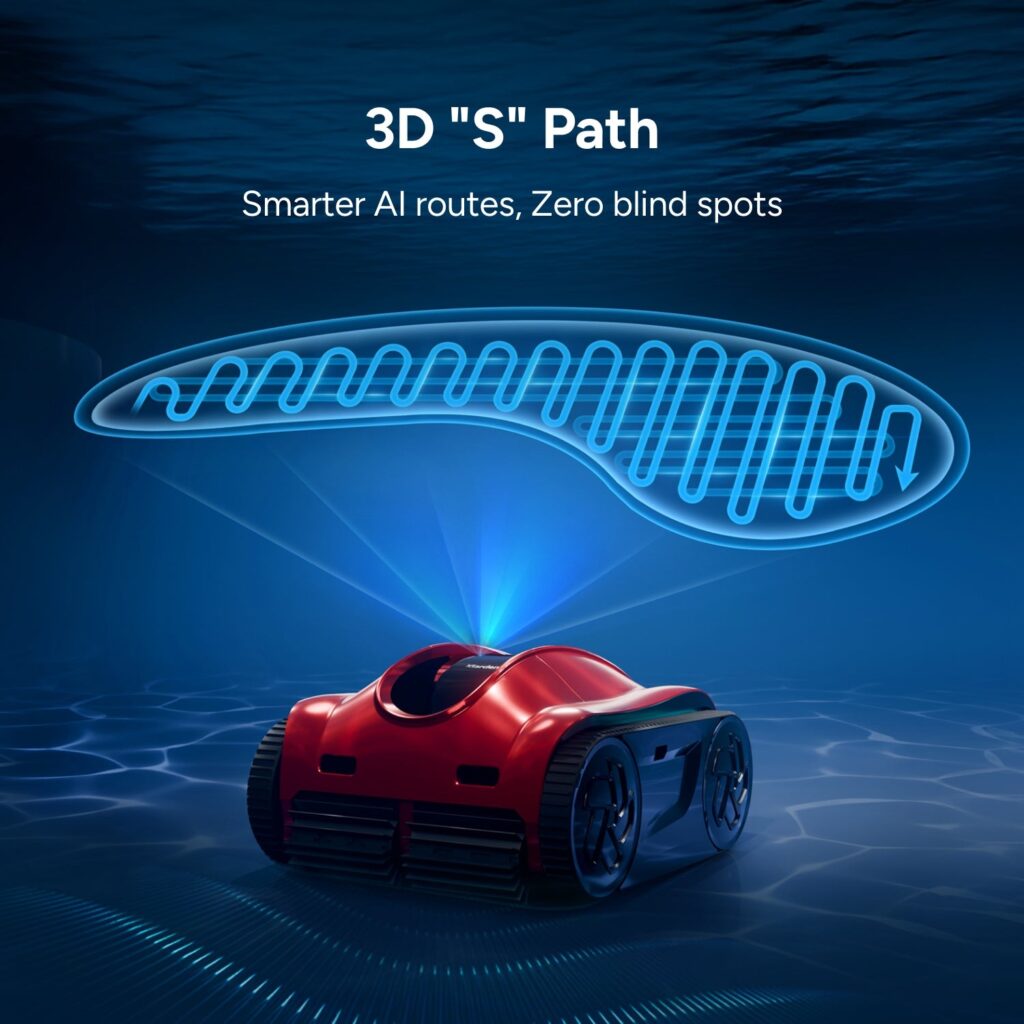
The mechanical foundation typically involves dual or triple rotating brush assemblies positioned to agitate surfaces at multiple contact points. These brushes loosen stuck-on biofilm, calcium scale, and embedded grit while the cleaner’s internal pump draws water through wide-mouth intake channels. Fine filtration cartridges then trap particles down to two or three microns—small enough to capture pollen, sunscreen residue, and microscopic algae spores that would pass through a standard pool filter. Larger debris like leaves, twigs, and insects gets separated into dedicated chambers so it doesn’t clog the fine media or reduce suction power mid-cycle.
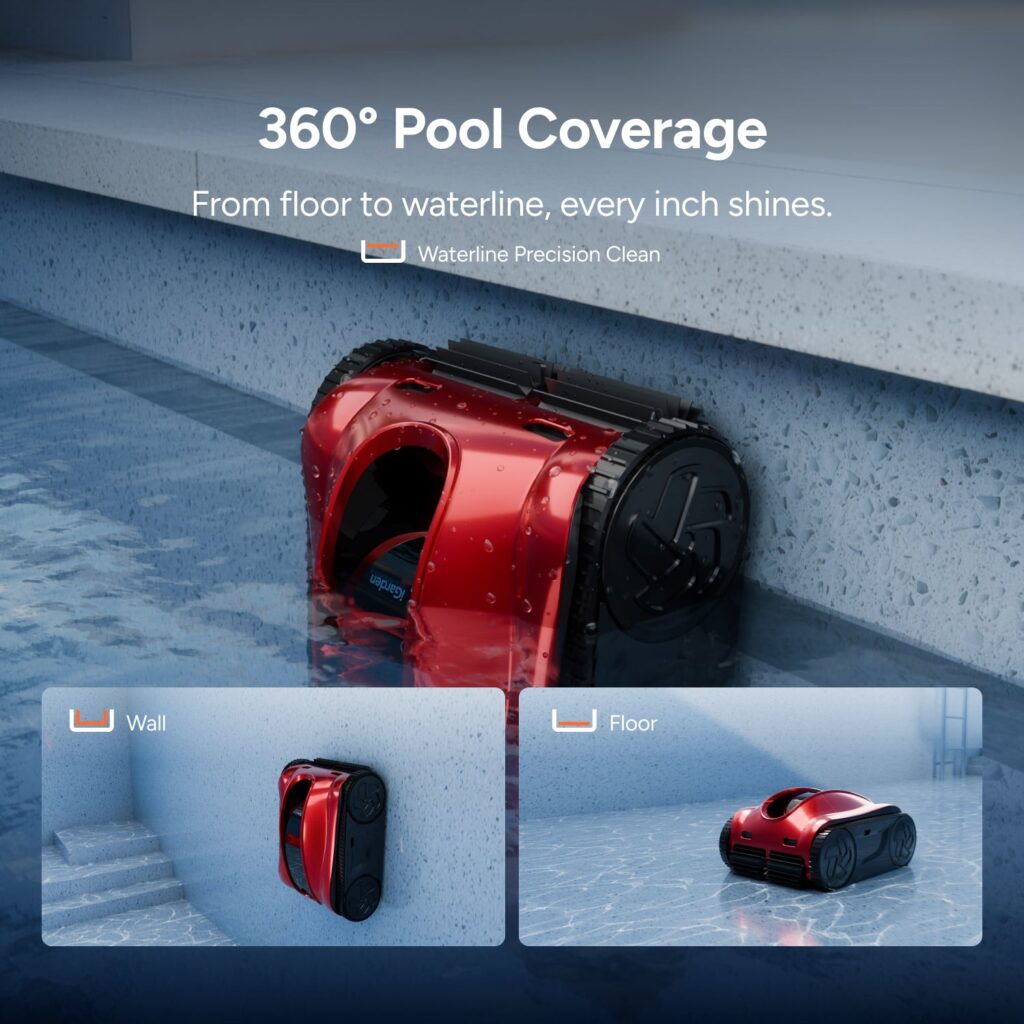
When paired with smart navigation, 360° cleaning creates a genuinely comprehensive system. The navigation ensures every square inch of floor, wall, and waterline receives attention, while the omnidirectional pickup mechanism guarantees that a single pass is sufficient to clean each section thoroughly. This eliminates the need for multiple overlapping passes and dramatically reduces total cycle time. For homeowners, the practical result is simple: drop the cleaner in, press start, and return to a pool that’s uniformly clean from the deep end floor to the tile line—no follow-up brushing, no missed corners behind ladders, and no residual film on walls. It’s the closest thing to a true “set it and forget it” solution that pool maintenance technology currently offers.
Choosing the Right Smart Pool Cleaner for Your Needs
Selecting the ideal smart pool cleaner starts with understanding your specific situation rather than chasing the most feature-packed model available. Your pool’s surface material matters significantly—concrete and plaster pools require aggressive brushes that can handle textured surfaces, while vinyl and fiberglass demand softer materials that won’t scratch or tear delicate linings. Match the cleaner’s brush type to your surface, and you’ll get effective scrubbing without risking damage.
Pool size and shape directly influence which navigation system will serve you best. Larger pools benefit from cleaners with extended battery life or longer cable reach and advanced path-planning algorithms that minimize wasted movement. Freeform or L-shaped pools demand adaptive navigation that can segment irregular spaces into zones, whereas simple rectangular designs work well with straightforward grid patterns. Consider your typical debris load too—if mature trees surround your pool, prioritize models with large-capacity debris chambers and leaf-handling capability. For pools primarily dealing with fine dust, pollen, or sand, focus on filtration quality, looking for cartridges rated at two to three microns.
Connectivity features like Wi-Fi control and smartphone apps add genuine convenience, letting you schedule cycles, monitor progress, and receive maintenance alerts remotely. Brands like iGarden have been advancing smart home integration in outdoor spaces, making it easier to manage pool cleaners alongside other connected devices from a single ecosystem. However, treat connectivity as a bonus rather than a substitute for core performance. When comparing models, use this evaluation framework: first confirm the navigation technology uses real sensors and adaptive algorithms rather than random movement; second, verify 360° cleaning capability with omnidirectional brush and suction design; third, check that filtration matches your debris type; and finally, read owner reviews specifically mentioning coverage consistency across walls, steps, and waterline areas. Prioritizing smart navigation and comprehensive cleaning as your primary decision factors ensures you’re investing in genuine efficiency rather than superficial features.
Maximizing Your Investment: Maintenance and Optimization
Your smart pool cleaner is a precision instrument, and treating it like one ensures years of reliable, efficient performance. After each cleaning cycle, remove the filter cartridge and rinse it thoroughly with a garden hose, dislodging trapped debris from the pleats or mesh. Allowing fine sediment to dry and harden inside the media reduces suction power and forces the motor to work harder, shortening its lifespan. Every few weeks, soak the cartridge in a mild cleaning solution to dissolve oils from sunscreen, body lotions, and organic residue that rinsing alone won’t remove.
Inspect the brush assemblies monthly by running your hand along the bristles or foam rollers. Worn brushes lose their ability to agitate stuck-on biofilm and scale, which means the cleaner passes over grime without actually removing it. Replace them at the first sign of flattening or fraying—waiting too long compromises cleaning quality and puts extra strain on the drive motors. Check the power cable or charging contacts for nicks, kinks, or corrosion, and store the unit out of direct sunlight in a cool, dry area to prevent UV degradation of plastic housings and seals.
For optimization, schedule cleaning cycles to run after heavy storms or windy days when debris loads spike, rather than on a rigid daily timer. Running the cleaner during off-peak energy hours reduces electricity costs for corded models. Occasionally clear the pool of large objects like toys or floats before a cycle starts—this lets the navigation system operate without unnecessary recalculations and delivers faster, more efficient coverage. Consistent upkeep of these simple tasks protects the sensors and algorithms that make smart navigation possible, ensuring your cleaner delivers the same thorough results on day one thousand as it did on day one.
Embrace Effortless Pool Maintenance with Smart Technology
Smart navigation and 360° cleaning technology have fundamentally transformed pool maintenance from a labor-intensive chore into an effortless, reliable process. What once demanded hours of manual vacuuming, brushing, and frustrating spot-checking now happens automatically with precision that human effort simply cannot replicate. These systems don’t just clean—they think, adapt, and deliver consistent results across every surface of your pool, from the deepest floor sections to the waterline tile.
For homeowners who value their free time and want a pool that’s always ready for a swim, investing in an intelligent cleaner equipped with genuine sensor-driven navigation and omnidirectional cleaning capability is one of the smartest decisions you can make. It solves the core frustrations of incomplete coverage, wasted energy, and constant supervision in one package. The technology pays for itself not just in reduced chemical costs and extended surface life, but in the weekends reclaimed and the confidence that your pool is truly clean every single day.
Pool care is only getting smarter from here. As navigation algorithms improve and cleaning systems become even more adaptive, maintaining a pristine pool will require less thought and less effort than ever before—leaving you free to simply enjoy the water.