In aviation maintenance, internal inspections often come down to one practical goal: get a clear, reliable view of the right area without creating unnecessary work. Borescopes are essential for that, but not all borescope systems are the same. The choice between a rigid borescope and a flexible system can affect inspection speed, coverage, image quality, documentation, and even the risk of probe damage. Maintenance teams that match the tool to the task tend to get more consistent results and fewer repeat inspections. Providers like USA Borescopes support aviation teams with inspection tools built for real maintenance conditions, including both straight access inspections and complex routing work where flexibility is critical.
Understanding Rigid and Flexible Borescope Designs
Rigid and flexible systems each have strengths, and neither is universally better. The best option depends on access geometry, the inspection target, and what the maintenance team needs from the inspection outcome.
What a rigid borescope is best at
A rigid borescope is a straight, non-bending instrument that typically uses optical transmission or a fixed camera setup. Rigid systems often provide excellent clarity and a stable view, especially in straight-line inspections. Because the scope does not flex, it can be easier to control and less prone to orientation confusion. Many rigid borescopes also support interchangeable viewing angles, which can help with targeted inspections when access is direct.
What a flexible system is best at
Flexible borescopes and videoscopes use an insertion tube that can bend and route through complex pathways. Many include articulation that lets the inspector steer the camera tip to view critical surfaces from multiple angles. Flexible systems typically excel in on-wing engine inspections and other tasks where access ports lead to curved routes, tight turns, and obstructed lines of sight. Flexible systems also commonly support digital capture and reporting workflows, which are important for maintenance documentation.
Best Use Cases for Rigid Borescopes
Rigid borescopes earn their place when access is straight, stability matters, and the inspection target is reachable without navigating around obstacles.
Straight access inspections with reliable alignment
If an inspection port allows direct sight to the area of interest, rigid is often the simplest and most reliable choice. Straight access reduces the need for articulation and reduces the chance of missing areas due to navigation difficulty. In these cases, the inspection can be quicker because setup and positioning are simpler.
Common examples include certain accessory inspections, housings with direct line-of-sight openings, and shop-based checks where components are already removed and can be positioned for straight access.
Tasks where view stability matters
Rigid borescopes can be easier to stabilize. A steady view improves defect confirmation and supports crisp still images. This is especially helpful when technicians need to evaluate fine surface detail and avoid motion blur.
Stable viewing can also improve repeatability. If the same inspection is performed routinely, a rigid scope can help technicians capture consistent views from the same orientation each time.
Inspections where simplicity reduces risk
Rigid systems have fewer moving parts related to articulation. For teams that perform straightforward inspections frequently, this simplicity can reduce the chance of tool handling issues and speed up training for newer technicians. It can also reduce the chance of accidental probe contact in tight bends, since rigid probes are typically not used for complex routing tasks in the first place.
Shop environments and controlled setups
In a shop environment, technicians can often position components to maximize straight access. When a component is on a bench, rigid systems can be highly effective for internal confirmation checks, quality verification after repair, and targeted inspection of known areas of interest.
Best Use Cases for Flexible Systems

Flexible systems are typically the default choice for most on-wing engine inspections and any task where access requires routing through tight, curved, or obstructed pathways.
On-wing engine inspections through access ports
Modern engines are designed for performance and efficiency, not for easy internal visibility. Access ports often lead to routes that require careful navigation. Flexible systems allow technicians to reach compressor stages, combustor areas, and turbine sections without removing the engine.
Articulation matters here. Many critical inspection targets are not visible from a straight approach. Blade edges, tips, platforms, cooling feature zones, and transition regions often require steering the camera to confirm the condition from multiple angles.
Tight access and complex internal geometry
Flexible systems are valuable anywhere the inspection path includes turns, obstacles, or limited clearance. This includes some gearbox inspections, confined structural areas, and internal cavities where straight access is impossible.
Flexible systems can also reduce disassembly. When the alternative is removing adjacent components to gain a line of sight, a flexible probe can often provide the needed view with less disruption.
Documentation needs and collaborative review
Flexible videoscopes often include strong digital capture features. In many maintenance programs, an inspection is not complete until it is documented clearly. Engineering teams, quality reviewers, and sometimes OEM support may need images and short video sweeps to evaluate findings quickly.
When an indication is borderline, documentation becomes even more valuable. Clear visuals reduce delays and reduce the need to repeat inspections because a description was unclear.
Versatility across multiple inspection tasks
Flexible systems are often used across engines, airframes, and accessories because they can handle a wider range of access constraints. For organizations that want one tool platform to support many inspection scenarios, flexibility can deliver stronger overall value.
Maintenance teams that are comparing probe diameters, articulation options, imaging features, and accessories often review available configurations through the USA Borescopes product catalog.
Factors That Should Guide Your Choice
Choosing between rigid and flexible should be a structured decision. The sections below cover the most common factors maintenance teams weigh in real-world aviation settings.
Access points and inspection routing
Start with geometry. If the inspection path is straight and clear, rigid can be an efficient choice. If the path includes bends, obstacles, or the need to look around corners, flexibility is usually the better option.
A useful question is whether you can reach the target area and view it from at least two angles without forcing the probe. If the answer is no, a flexible system with articulation is more likely to provide complete coverage.
Component type and inspection target
The inspection target matters. Some targets require close evaluation of edges, tips, and textured surfaces. Others require broader context sweeps.
- Turbine blades and hot section parts often benefit from flexible articulation and lighting control because the targets are reflective and angle-dependent.
- Straight internal bores, passages, and certain housings can be well suited to rigid systems when alignment is direct.
If the target requires repeated repositioning to confirm a detail, flexible articulation can save time and reduce uncertainty.
Image quality requirements in the real environment
Rigid scopes often perform well in scenarios where stable alignment produces strong clarity. Flexible videoscopes provide excellent imaging in many cases, but the key is how the image holds up under your specific lighting and surface conditions.
Hot section work can be challenging due to glare, heat tint, and deposits. Lighting control and the ability to adjust viewing angle often matter more than raw resolution.
Inspection frequency and workflow speed
If the task is frequent and straightforward, rigid can reduce setup time and simplify training. If the task is frequent and complex, flexibility often wins because it reduces disassembly and provides broader coverage.
Also consider whether the inspection is performed under line maintenance time pressure. Flexible systems that reduce teardown can protect the schedule, even if the tool itself takes slightly longer to position.
Documentation expectations and reporting standards
If inspection outcomes require image capture, labeling, and consistent recordkeeping, flexible videoscopes may be the better fit because digital documentation is often integrated into the system workflow.
A practical way to evaluate this is to ask how often images are reviewed by someone who was not present for the inspection. The more frequent the remote review is, the more important consistent digital capture becomes.
Risk of tool damage and handling constraints
Tool handling is part of the decision. Rigid systems are not meant to be forced through tight bends. Flexible systems can route through complex paths, but they are also more likely to contact internal surfaces if the technique is rushed.
Choosing the correct probe diameter, using controlled insertion, and stabilizing before image capture are important regardless of system type. The best tool is the one the team can use reliably and repeatedly without causing probe damage or incomplete coverage.
A Practical Selection Approach for Maintenance Teams
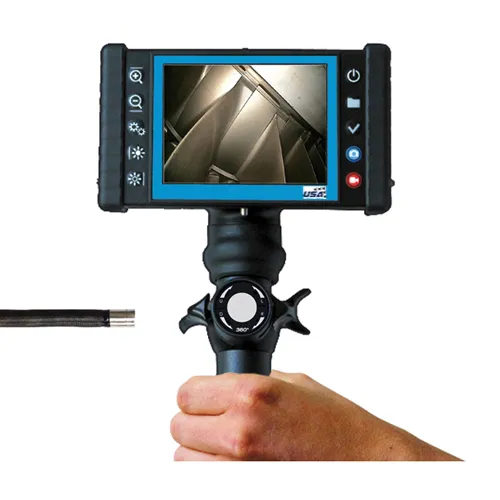
A simple way to choose is to match the tool to the most common inspection scenarios, then fill gaps with secondary capability.
Many teams use a flexible system as the primary tool for on-wing engine inspections and confined access work, then use a rigid borescope for straightforward shop inspections where stability and simplicity matter. This approach can reduce tool compromise and improve consistency across different maintenance tasks.
When evaluating tools, focus on the work you do most often. A system chosen for rare scenarios may underperform in daily inspections. A system chosen for daily inspections can usually be supplemented with specialty accessories or an additional configuration for the occasional edge case.
Select the Configuration That Matches the Inspection Reality
Rigid borescopes are often the best choice when access is straight, stability matters, and the inspection target can be reached without complex routing. Flexible systems are typically the best option when access paths are tight, angles matter, and documentation needs are high, especially for on-wing engine inspections.
Effective inspections depend on selecting the right combination of probe design, imaging capability, and handling characteristics. USA Borescopes offers aviation-focused inspection equipment suited to both direct-access and complex routing inspections. Maintenance organizations that want help matching probe configuration, imaging features, and handling to their inspection needs can contact USA Borescopes to discuss the best fit.
About the Author
The author is an aviation inspection specialist with extensive experience supporting remote visual inspection programs across line maintenance and shop environments. Their focus includes inspection technique, defect recognition, and documentation standards that improve repeatability. They provide independent guidance to help maintenance teams reduce uncertainty, limit unnecessary disassembly, and make clearer maintenance decisions.